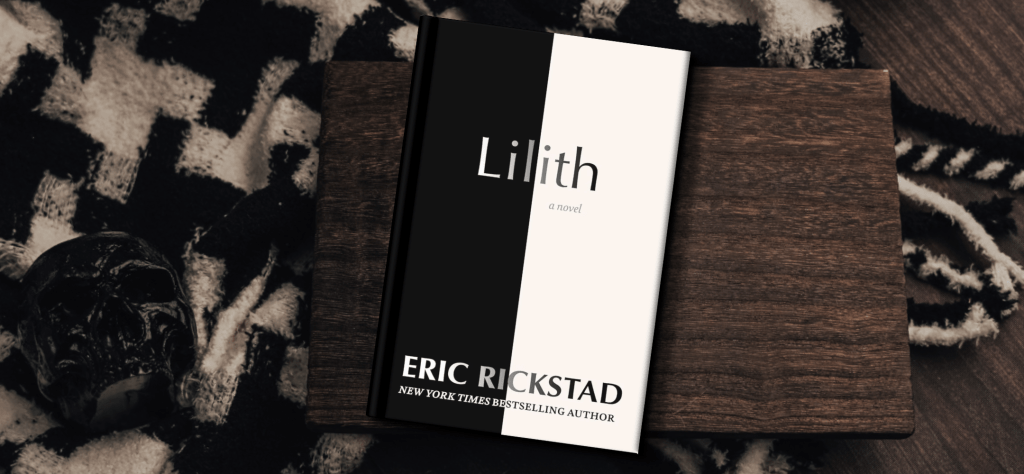
Title: Lilith
Author: Erik Rickstad
Release Date: March 19th, 2024
Pages: 245
Genre: Literary Thriller
GoodReads Rating: 3.88 ★
My Rating:
Lilith is one of those books that has been on my TBR for a very long time. I remember it being recommended to me as a thriller, and I was a bit cautious about that. I don’t really like books that involve a school shooting because it’s almost always just a vehicle for drama and tension, simply a means to an end. I believe that school shootings are a very sensitive topic that should be handled with more tact than most books do. I was relieved to discover while it is described that way on Goodreads, I would disagree with that genre assessment. This is much more in line with a literary fiction novel. The shooting is not just the catalyst; it is the whole story, and the author took a much deeper look at analyzing the idea of a school shooting and what it means that it’s been so normalized within our society.
Elizabeth has become used to the school shooting drills that she and her elementary school class perform every Monday, but one morning the drill becomes all too real when gunshots are heard from across the school. Elizabeth makes a choice: instead of hiding her children in the classroom and waiting for the gunman to pass them by, she leads her children away from the school and to safety, then runs back to find her son Lyden. He’s suffered terrible, traumatic injuries that will forever change his life and functionality, and Elizabeth is broken.
She’s angry at a world that could allow something so horrible to happen to her child and move on like nothing important was lost. Compounding her pain, right-wing gun nut and political candidate Akers dismisses the consequences of the shooting on television and calls for more guns as the solution, claiming teachers should arm themselves. Elizabeth feels Akers should get a taste of his own medicine. She dons a disguise and a new name, Lilith, to try to achieve some kind of justice when the world will give her none. Her shocking act of violence sets society ablaze, but Elizabeth questions if her actions were correct when the image of Lilith begins to spiral out of her control.
Characters
Elizabeth is a single mom and teacher who is just trying to raise her son. The reader doesn’t really get to see Elizabeth before she’s consumed by grief and anger over the attack on her son, so much of her personality is winnowed down to a sharp, driven point. We do learn that she’s intelligent in the way she plans her attack, vigilant with her disguises and observations, and vicious, both internally and externally, toward those she believes, wronged her and Lyden. Elizabeth also believes she has some kind of destiny, and she’s believed this since her childhood. It motivates her actions near the beginning of the story when she’s first planning the attack. It’s an interesting aspect to her character because it allows her to move through a lot of the denial or barriers that others would have in relation to killing people. If she can convince herself that this was always going to happen, then she can make it happen. Lilith is not another person or personality. It’s just Elizabeth at her most vengeful which I really appreciated.
It’s impossible not to feel bad for little Lyden. I can’t remember exactly how old he is, but it’s somewhere between seven and nine years old. It’s a completely impossible age for him to understand what has happened to him, let alone why. The adults in his life can’t even comprehend why because there is no “why”. The violence was completely senseless. He spends most of the book dealing with the fallout of what was done to him and managing his pain and his severe PTSD. Despite the shooting, Lyden is still an extremely sweet little boy who deeply loves and cares about his mother, and he supports her however he can. I think it was a bit odd that there was an almost supernatural turn in his character where he’s acting strange and recovering much too quickly, and I’m not really sure why it was there. I can’t find a thematic reason, though there are a few functional ones. It didn’t ruin the character for me.
They’re the only two characters that really matter to the story. Elizabeth’s uncle serves a purpose, and I liked the scenes involving him. He does remain quite a mystery to the audience, though, and that’s alright for his character. Akers is the only other character who is really important to the narrative. He’s a conservative, gun extremist who believes that the solution to gun violence is more guns. It would feel ridiculous and unrealistic if it wasn’t literally what is happening in the United States right now. His character is definitely a bit over the top, but in a way that’s obviously and intentionally satirical. He’s taken to the extreme, even though it isn’t really that extreme for us, to prove a point. He was plenty rounded out enough to play his role in this story.
Writing & Atmosphere
Lilith combines the sometimes winding literary style of prose with moments of more direct, extremely visceral description. Many of the passages were quite beautiful and emotionally evocative rather than existing in a purely functional state. At times, it was very difficult to listen to, especially regarding Lyden and his injuries. He’s obviously extremely traumatized, and the reader follows his entire journey from the hospital to his home in graphic detail.
“Nine hours of surgery to salvage his bladder so it might work half as well as it did, if infections do not consume him. His prostate cut from his thin boy body, seminal vesicles too, rendering him unable to know a certain intimacy but familiar with the incontinence of the old man he probably will never be, his injuries likely to shorten his life by at least two decades. If he survives the next breath. If he ever wakes. […] All this just his bodily damage. Who can know the damage to his soul and mind?”
Lilith (2024)
This language and intensity, while gruesome, is vital to the point that this book is trying to make. Injuries like these and worse happen to children all the time in America. Every single week now there is some kind of mass shooting, and Americans are numb. The shock of the detail is important to dislodge the “normalcy” from the reader’s brain.
The atmosphere was tense and hopeless for most of the story, bordering on nihilistic. It makes sense for this kind of story. Elizabeth never expected to be able to make any kind of large-scale change to a society that moved on from the worst day of her life in hours.
My only real complaint with the writing is that at times it felt a bit too much like a male author trying to write an angry woman. It wasn’t too distracting to me, but occasionally it felt like the book turned to the female audience with a wink and nudge, saying, “Men, am i right?” It wasn’t very often, though, because the author understands what he is trying to say about male violence in America. It’s not pandering; he’s trying to make a point.
Plot & Pacing
The pacing is difficult to describe. Lilith is not a long book, so there’s very little downtime in between the events of the story, keeping it moving quickly. However, a solid amount of the page count is taken up by Elizabeth in her own head, whether she’s grieving, planning, or contemplating her actions or the actions of others. It strikes a solid balance between moving the story forward and taking the time to explore the themes with enough depth to keep them from feeling incomplete or surface-level.
The plot is quite different from how it existed in my head. I had assumed that Elizabeth, as Lilith, would become a “serial killer,” getting justice against all the characters, all the men, who contributed to the situation that left Lyden so injured. However, that’s not the case. Lilith commits one act of severe violence that becomes the catalyst for the rest of the book, but Elizabeth isn’t sure she’s done the right thing. She doesn’t keep the moniker of Lilith, and she doesn’t think of herself as Lilith. She spends the rest of the story contemplating if what she did was right and trying to cover her tracks.
I didn’t mind this, really. It creates a dichotomy between her and the violence that other characters perpetuate. The shooter didn’t care about the consequences of his actions, but Elizabeth does. Akers doesn’t care about the consequences of his actions, but Elizabeth does. It separates her from the mindless violence, the violence for the sake of violence or power, and gives her more plausible deniability against the accusations of being a hypocrite.
Elizabeth’s actions as Lilith unintentionally inspire a wave of copycats: women who are utilizing gun violence to strike back at the men they believe deserve it. I really wish this were explored deeper because Elizabeth’s feelings toward this are complicated. She seems disgusted and upset by this violence that’s being committed, even against the men who might deserve it. For example, two women end up killing a man at their college and a judge because the man raped them and the judge gave him an extremely light sentence. This, I would think, would be justified in Lilith’s mind, but Elizabeth doesn’t feel that way. I wish I understood better why she doesn’t feel like it’s justified because as is, it makes her a bit more unlikable to me. “Only I’m allowed to enact violent revenge on those who have harmed me, not you women who are victims of rape!” Something about that rings very false, even though I understand that the book has to explore her complex feelings around gun violence.
I don’t think I have much else to say about the actual plot of the book, even though it is quite good, because the book is primarily interested in exploring its themes.
Themes
Lilith is filled to the brim with thematic messaging, and most of it is done fairly well. The book is very focused on the idea of violence as male, but not inherently male. Lyden is not portrayed as violent simply because he is a male, and neither is Elizabeth’s uncle. It’s less that violence is inherent to men, and more that the patriarchy rewards violence committed by men, and it has for a very long time. This violence affects and shapes so many aspects of American culture that it’s hardly surprising that we have an issue with gun violence, specifically tied to young, white men. According to the Statista Research Department, out of 156 mass shootings between 1982 and March of 2026, 153 shooters were male. That’s 98.1%.
The shooter in Lilith is not the focus of Elizabeth’s ire at all. She recognizes him as a symptom of a much larger issue, and the book doesn’t even feel the need to name him. The rhetoric, the politicians, and the system are to blame. It’s clear that there is a male violence problem, and the United States’ lax gun laws give these men the opportunity to feel powerful by killing those they perceive as weaker than them. Lilith argues that this has always been the way of men.
“They shape the world through violence and conquest, pillaging and rape and genocide, oppression and control; they use their own language to mold a world that’s male dominant, male centric, male first.”
Lilith (2024)
There are also some compelling ties between sex and violence in this book. The men that examine the weapon that Elizabeth, as Lilith, uses to bait them into her trap speak about the weapon in graphic sexual terms. Akers even says at one point that he wants to “tongue fuck the barrel” of the rifle. This specifically sexual glorification of violence is a part of rape culture. The language that is used to talk about sex amongst men— “banged her, hit that, ran a train, cracked her”— is inherently violent and places the women as the objects of that violence. It’s no wonder, then, that when Lilith’s violence leaves her own sphere of influence, it begins with women getting vengeance for their rapes.
When Lilith’s actions in the story go viral, it inspires a wave of women to commit their own violence, specifically their own shootings. The system, the institutions, that did not care when the violence was occurring at the hands of men, are outraged at the violence that the women commit against them. It upsets the “natural” order where men are allowed to commit violent actions and women must suffer the consequences. It’s a vicious deconstruction of the patriarchy, and it essentially causes a gender war. It’s a shame that the book focuses so little on this idea because it has massive potential for exploration, but Elizabeth’s smaller story is obscuring some of these conclusions. The reader can still draw them, but Elizabeth’s internal monologue is less focused on the world at this point and more focused on Lyden.
I’m going to make a few metaphorical reaches here, so I hope you’ll indulge me, but I do think I’m onto something. Elizabeth is being punished for not following the school’s protocols in regard to the active shooter. Instead of hiding and waiting, as the district says she should, she got her students out of the building and saved their lives. However, because she broke protocol, she is being suspended by the district at a time when her health insurance is vital to support Lyden’s injuries. I think that this whole situation is a metaphor for the 2nd Amendment of the United States Bill of Rights. We, the people, are being forced by those above us to accept and follow the 2nd Amendment, the protocol, and use it as an excuse to not change a system that isn’t working. The district protocol clearly doesn’t work. Many students were killed and injured, but they refuse to deviate. The majority of Americans support more gun control laws, and yet, year after year, shooting after shooting, they are never passed. The only thing that worked in Lilith was operating outside of the protocol, and eventually outside of the law.
Recommendation
I would recommend Lilith with a heavy disclaimer that this is a serious book about gun violence in a graphic and often disturbing way. There are a lot of guns described in detail, and a lot of violence involving guns described in detail. In addition to that, many of the victims of this violence are children, and the book does not shy away from showing the horrible deaths and injuries of these children. I’m not typically bothered by gore or injury in books, and even I was a bit uncomfortable. If you can handle it, Lilith is a good read with a lot to say about the culture of violence that exists in America and the feelings that we live with existing in that society.
Trigger warnings:
Gun violence, mass/school shooting, violence, suicidal thoughts, blood, rape mention, sexual assault mention, child death, grief, medical content, misogyny.